
Open any dog marketplace and search “Bully Kutta”. You will see a huge, wrinkled dog sitting beside a person who looks small next to it, and a caption that shouts about size or “fighter line”. It looks impressive. It also tells you almost nothing about what living with one is like.
The Bully Kutta, also sold as the Pakistani Bully or Indian Bully, is one of the most misunderstood dogs in the country. It is a real working breed from Punjab and Sindh, powerful, loyal and wary of strangers. For the right owner, it is a devoted guardian. For the wrong one, it is a legal, financial and safety problem that outweighs everything else.
This guide covers what the breed is, how big it really gets, what it costs in India, what the law says today, and how to buy a puppy without being cheated. We will tell you plainly, even when the answer is “this is not the dog for you”.
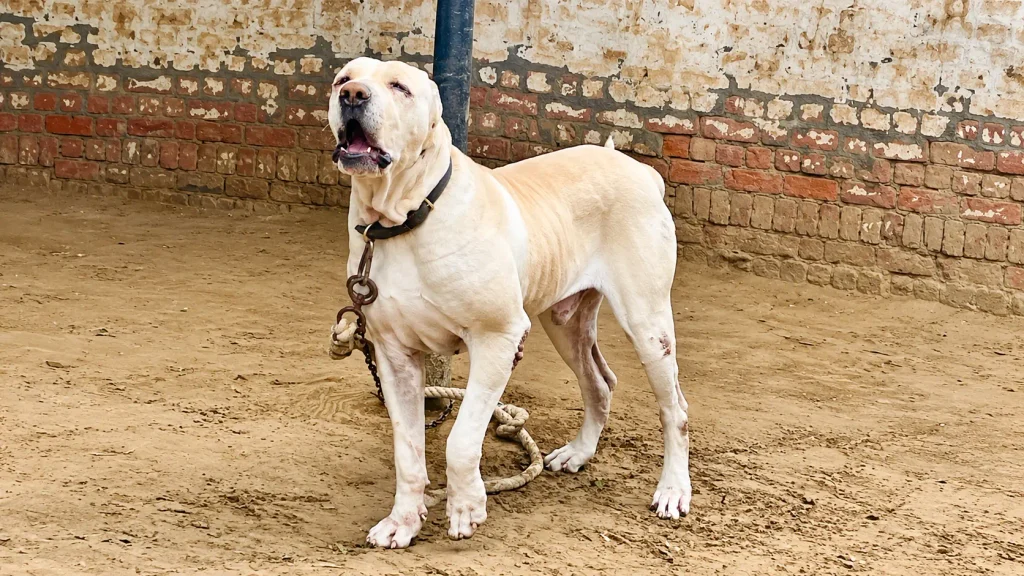
Bully Kutta at a Glance
| Detail | What to know |
|---|---|
| Origin | Punjab and Sindh regions of the Indian subcontinent |
| Also called | Pakistani Bully, Indian Bully, Pakistani Mastiff, Indian Mastiff, Sindhi Mastiff, Alangu |
| Type | Mastiff-type guardian, used for guarding and hunting |
| Height | About 75 to 89 cm (30 to 35 inches) at the shoulder |
| Weight | Males about 70 to 90 kg, females about 60 to 70 kg |
| Coat | Short. Colours include white, fawn, black, red, brindle and patched |
| Lifespan | About 8 to 10 years |
| Recognition | Not recognised by the Kennel Club of India or FCI. Some local registries exist [CONFIRM] |
| Legal status | No enforceable national ban at present. City and housing society rules differ |
Sizes vary between sources and between individual dogs, so treat these as a range. Sources: Wikipedia, Hepper and Dog With Blog.
What Is a Bully Kutta?
The Bully Kutta is a large mastiff-type dog from Punjab and Sindh, also called the Pakistani Bully or Indian Mastiff. Males can reach 70 to 90 kg and stand over 75 cm tall. It is loyal and protective, wary of strangers, and needs an experienced owner, strong fencing and daily exercise.
Bully Kutta, Pakistani Bully and Indian Bully: Are They Different?
In most listings, these three names point to the same dog. “Kutta” simply means dog, and “bully” is usually explained as coming from a word for wrinkled, after the loose skin on the face and neck. Because the names are used loosely, always ask to see the puppy’s parents before you believe any label.
The real mix-up is with the American Bully, which is a completely different breed. It was developed in the United States from the 1980s and 1990s, built on the American Pit Bull Terrier, and is much smaller.
| Bully Kutta | American Bully | |
|---|---|---|
| Origin | Punjab and Sindh, South Asia | United States, 1980s and 1990s |
| Adult weight | About 60 to 90 kg | About 20 to 60 kg, depending on type |
| Shoulder height | About 75 to 89 cm | About 33 to 58 cm, depending on type |
| Originally used for | Guarding and hunting | Companionship |
The rule of thumb is simple. If someone offers a “Bully Kutta” that will stay at 30 kg, or an “American Bully” that will reach 80 kg, something in the story is wrong. Ask for photos and weights of both parents. Sources: American Bully on Wikipedia and the Bully Kutta sources above.
Where the Bully Kutta Comes From
The breed belongs to the Punjab and Sindh regions. Some sources trace it back to the 16th century, though that date is thinly sourced, and one account says the Mughal emperor Akbar kept one for hunting. What is clear is the job: guarding property and livestock, and hunting.
Then comes the darker chapter. In recent decades the Bully Kutta became the dog most linked to illegal dog fighting in India and Pakistan, including around Delhi, Gurugram and Noida. Punjab Police filed the first FIR against fight organisers in June 2018. Dog fighting is a crime under the Prevention of Cruelty to Animals Act.
We mention this on purpose. If a listing says “fighter line” or “fighting blood”, that is not a selling point. It is a reason to walk away.
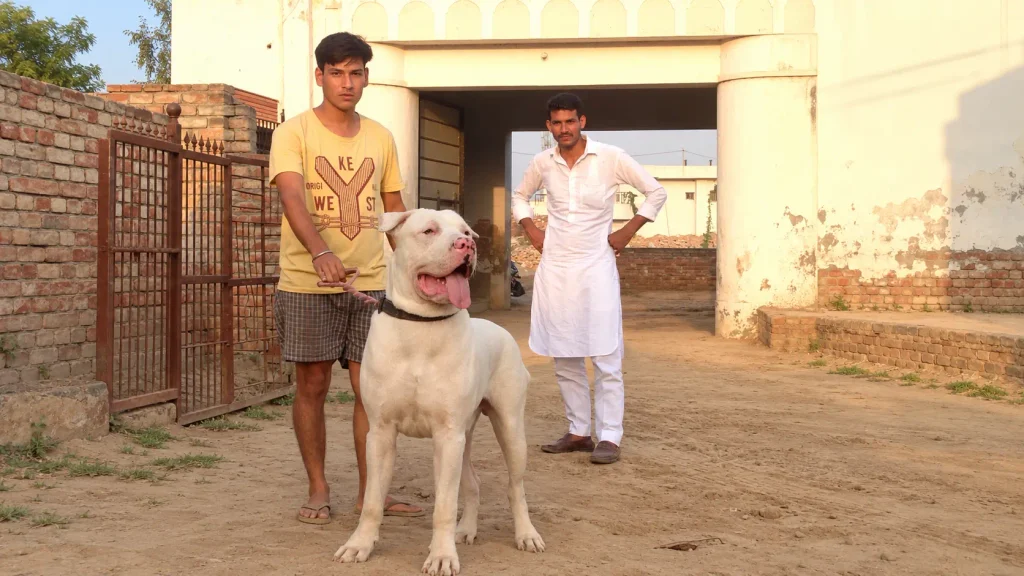
Bully Kutta Temperament: Not a First Dog
Every source we read says the same thing in different words. The Bully Kutta is intelligent, alert and dominant. It is protective of its home and its people, and it is often wary or aggressive toward strangers and other dogs. That is not a flaw to be trained away. It is what the breed was built for.
In experienced hands it is also very trainable. That phrase carries a lot of weight. Experienced means you have raised a large guardian breed before, you are calm and consistent, and you will pay for a professional trainer from the first month. Early socialisation, meeting many people and dogs calmly as a puppy, is not optional.
With children, sources split. One calls the dog gentle and playful with children it grew up with. Another advises against it in homes with small children. Our view is simple: a dog that can weigh 70 kg or more can hurt a child without meaning to, in play. If small children live in your home, think very hard, and never leave them alone together.
The same goes for other pets. One vet-reviewed guide advises against keeping it with other animals at home.
[ADD YOUR OWN LINE HERE: one real observation about how large guardian dogs behave around a house or a farm, from your own years with dogs.]

Size, Exercise and Space
A male Bully Kutta can weigh as much as a fully grown man. That affects everything: the vehicle you need, the fence you build, the lead you hold, and what happens if the dog panics on a walk.
Plan for strong, high fencing and a secure gate. Breed guides suggest a few long walks every day, around two to three miles in total, plus an hour or more of roaming in a fenced yard. Mental work matters too, because a bored dog this size finds its own jobs.
Heat is a real concern on the plains. The breed tolerates heat poorly, and heatstroke is a genuine summer risk, so give it shade, cool water and exercise in the early morning or evening. Avoid hard exercise straight after a meal.
This is not an apartment dog. If you live in a flat, the kind answer is a different breed.
Bully Kutta Health and Care
Vet-reviewed breed guides list a handful of problems to watch for: hip and elbow dysplasia (made worse by overfeeding puppies), bloat, heat intolerance, in-rolling eyelids, skin-fold infections and heart conditions. None is certain for any one dog. They are what vets look for in big, deep-chested, loose-skinned breeds.
- Ask your vet for a feeding plan for the growing puppy. Fast growth strains the joints.
- Clean and dry the facial wrinkles regularly, because damp folds invite infection.
- Guides advise a same-day vet visit for lameness, a swollen or painful belly, laboured breathing or eye trouble.
Many breeders crop the ears of these puppies. It is painful and unnecessary, and we advise against it. A seller who insists on cropping is a seller to question.
Bully Kutta Price in India
There is no standard price. One breed guide puts ordinary puppies at about ₹15,000 to ₹20,000, with prices reaching ₹50,000, and some sellers asking ₹1 lakh or more for “show” or “fighting” lineage. Treat these as rough guides, not quotes.
Here is the catch. The Bully Kutta has no Kennel Club of India or FCI standard and no health screening system, so a “pedigree” claim cannot be checked. Paying extra for a fighting line is paying for the very thing you should avoid.
The puppy price is also the smallest bill. A dog that grows past 70 kg eats a lot, needs a big enclosure and costs more at the vet. [ADD YOUR OWN MONTHLY FOOD AND CARE ESTIMATE]
Is the Bully Kutta Banned in India?
Not nationally, as of October 2026. But the picture is unsettled, so read this section before you pay anything.
In March 2024 the Centre’s circular asked states to stop the sale, breeding and keeping of 23 breeds it called “ferocious”. The Karnataka High Court stayed it on 19 March 2024, and the Delhi High Court set it aside on 16 April 2024, telling the Centre to invite objections first. The reports we read name Rottweilers, Pitbulls and American Bulldogs. The Bully Kutta is not named in them, although one headline refers to “Mastiffs” in general [CONFIRM].
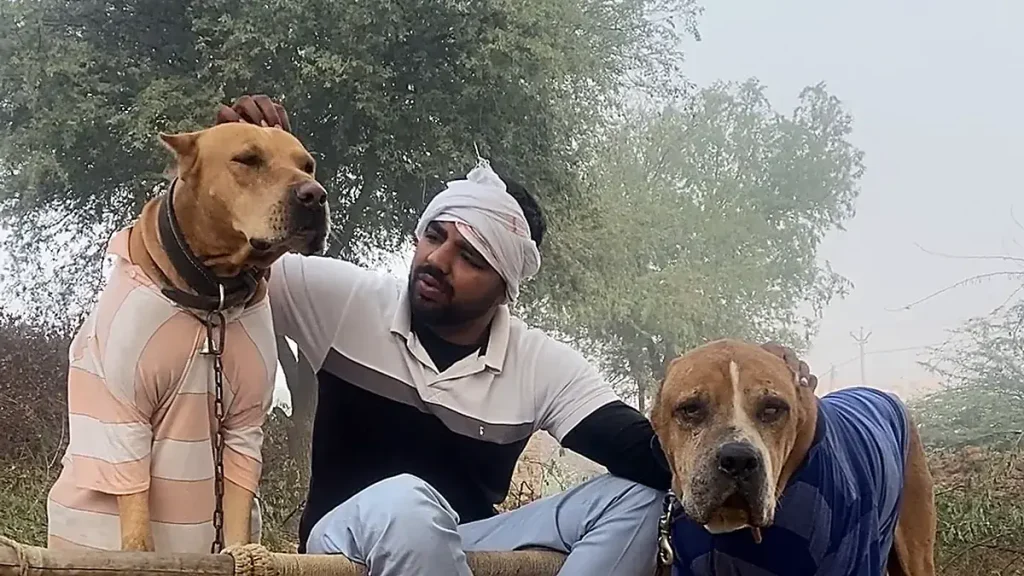
Then there is the local level, which often matters more. Cities such as Kanpur, Panchkula and Ghaziabad passed their own breed bans in 2022, and housing societies in places like Gurugram, Ghaziabad and Lucknow restrict breeds they call aggressive. Rules differ from one city, one society and one year to the next.
Before you buy, check three places: your municipal corporation, your housing society’s bylaws, and your state’s animal husbandry department. This is general information, not legal advice, and it can change.
Is a Bully Kutta Right for You?
It can work if:
- You have raised a large guardian breed before and know how to handle one
- You have your own house or farm with high, secure fencing
- You can afford a professional trainer from the first month and the food and vet bills of a 70 kg dog
- Your home has no small children or other pets, or you can manage them with full control
Think twice if:
- This is your first dog
- You live in a flat or a society with breed restrictions
- Small children are around, or visitors come and go often
- You want a dog mainly for how it looks or for status
Many Bully Kuttas end up in shelters, often surrendered young by first-time owners who were not ready. If you have the experience and the space but not the budget, adoption is a good route. If you want a puppy, talk to us first. We will tell you honestly whether it is the right choice for your home.
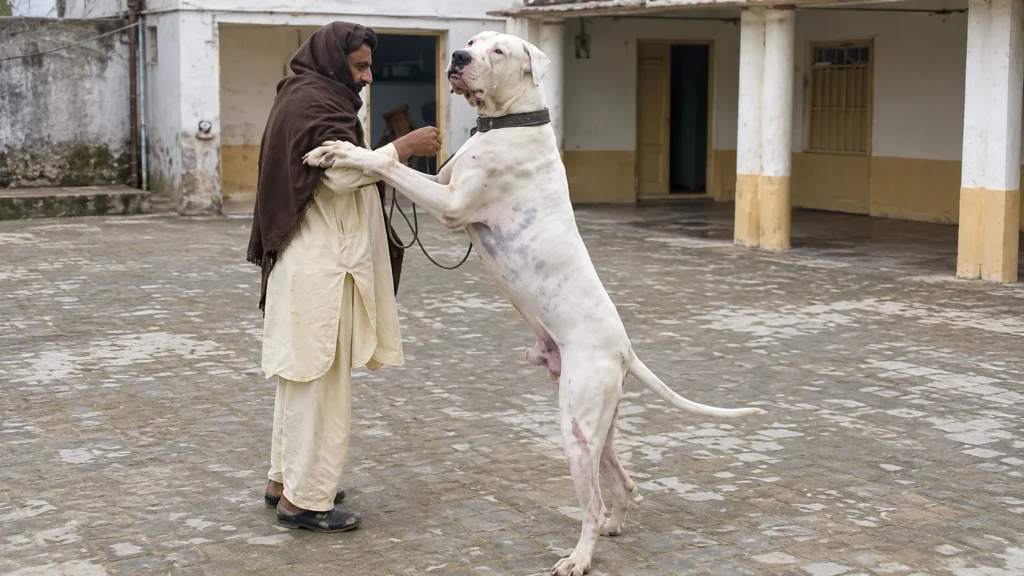
How to Buy a Bully Kutta Puppy Responsibly
- Check your local rules first. City, society and state, as above. Do this before you fall for a puppy.
- See the parents. Ask to meet the mother, and the father if he is around. Watch how they behave with strangers and with their handler. Ask for their weights.
- Visit, or insist on a live video call. Photos can come from anywhere. A live call showing the puppies with their mother is much harder to fake.
- Ask the pup’s age. Puppies usually stay with the mother until about eight weeks. A seller in a hurry to hand over a younger pup is not thinking about the pup.
- Ask for records. You want the vaccination card from a vet. Breeders in India are expected to be registered with their State Animal Welfare Board, so ask to see the registration.
- Walk away from certain sales lines. “Fighter line”, “aggressive guard” and “king size” are red flags, not features.
- Say no to ear cropping. It is painful and unnecessary.
- Never pay in full for a pup you have not seen. Be careful with urgency, refusal to do video, and requests for the full amount by transfer. Take a written receipt with the seller’s details.
- Plan a trainer and a vet before the pup comes home. A large breed is much easier to raise right than to fix later.
Bully Kutta FAQs
Is the Bully Kutta banned in India?
There is no enforceable national ban at present. A 2024 central circular on 23 breeds was stayed and set aside by High Courts, and the Bully Kutta is not named in the reports we read. City and housing society rules differ, so check locally before buying.
Is the Bully Kutta dangerous?
Any very large guardian dog can injure someone, and this breed was built to be protective and wary of strangers. Risk depends on breeding, socialisation, training and handling. That is exactly why it suits experienced owners and not first-time buyers.
How big does a Bully Kutta get?
Males commonly reach 70 to 90 kg and about 75 to 87 cm at the shoulder. Females are lighter, at roughly 60 to 70 kg. Sizes vary between dogs and between sources, so ask to see the parents.
What is the difference between a Bully Kutta and an American Bully?
They are different breeds. The Bully Kutta is a large South Asian mastiff-type from Punjab and Sindh. The American Bully is a much smaller American breed built on the American Pit Bull Terrier, usually 20 to 60 kg.
Can a Bully Kutta live in an apartment?
We would not advise it. The breed needs space, strong fencing, long daily exercise and protection from heat. For most flats, a calmer and smaller breed is the kinder choice.
How long does a Bully Kutta live?
Breed guides report about 14 to 17 years. Good food, regular exercise and routine vet visits give any dog its best chance.
Talk to Us Before You Decide
A dog this size lives with you for close to a decade, so the choice deserves a proper conversation, not a quick checkout. If you are unsure whether a Bully Kutta fits your home, message us on WhatsApp. The consultation is free. If you have not raised a large guardian breed before, we may ask you to wait or look at another breed, and we would rather say that now. If you would like to know who we are and why we started, that page is the place to begin.
This guide is general information from our own experience and the sources below. It is not veterinary or legal advice. For illness, please see your vet. For legal questions, check with your local authority or a lawyer.
Sources
- Wikipedia, Bully Kutta
- Hepper, Bully Kutta
- Dog With Blog, Bully Kutta (Indian Mastiff)
- Dog With Blog, banned dog breeds in India
- Wikipedia, American Bully
- News on AIR, Centre’s proposal on ferocious dogs
- Down To Earth, Karnataka High Court stay
- SCC Online, Delhi High Court judgment
- India TV, Karnataka High Court and 23 breeds